Stablecoins are proving to be more than just a digital version of the dollar for traders. Recent news from Japan shows that people are looking at these coins as a safety net for when traditional banks have to shut down or pause their services. Mr. Okabe from JPYC recently pointed out that these digital assets keep moving even if your local bank branch has to close its doors during an emergency.
The main idea is simple: stablecoins are digital tokens designed to keep a steady value, usually tied to a currency like the US dollar or the Japanese yen. Unlike other coins that jump up and down in price, these are meant to stay at one price so you can use them for daily buying and selling. If a bank stops its operations, a stablecoin holder can still send money to a friend or pay for a service using their digital wallet. This makes them a backup plan for the money in your pocket.
Why stablecoins stay running when banks do not
When you use a normal bank, you are relying on their private computers and their staff to be awake and working. If their system crashes or they have a holiday, your money is stuck until they open again. Stablecoins are different because they run on a blockchain, which is a network of many computers around the world that never all sleep at the same time. This means the "bank" is always open, 24 hours a day, every single day of the year.
Think about a Sunday afternoon when you need to send money to someone for an emergency. A bank might take until Monday or Tuesday to show that money in the other account. With a stablecoin, the transfer happens in minutes. This speed is why experts like Mr. Okabe are pushing for more people to understand how they work. It is not just about investing; it is about having a way to move value when the old ways fail us. You can learn more about the basics in our guide on Stablecoins Explained Simply for Beginners in Today's Market to see how they fit into your life.

Samsung and the push for digital payments
It is not just small companies looking at this tech. Big names like Samsung are now looking at how stablecoin payments can help businesses work better. When a huge company like Samsung shows interest, it tells us that digital coins are moving away from being a hobby for tech fans and becoming a real tool for global trade. They see a world where a business in Korea can pay a business in London instantly without waiting for five different banks to talk to each other.
This shift matters because it forces old-school finance companies to wake up. If you can pay for your new phone or your monthly bills using a stablecoin, you might not need a traditional credit card for everything. However, this also brings new risks. If the company behind the stablecoin does not actually have the cash they claim to have, the coin could lose its value. This is why looking at the news and checking if a coin is regulated is a vital step for any beginner.
How do stablecoins stay at the same price?
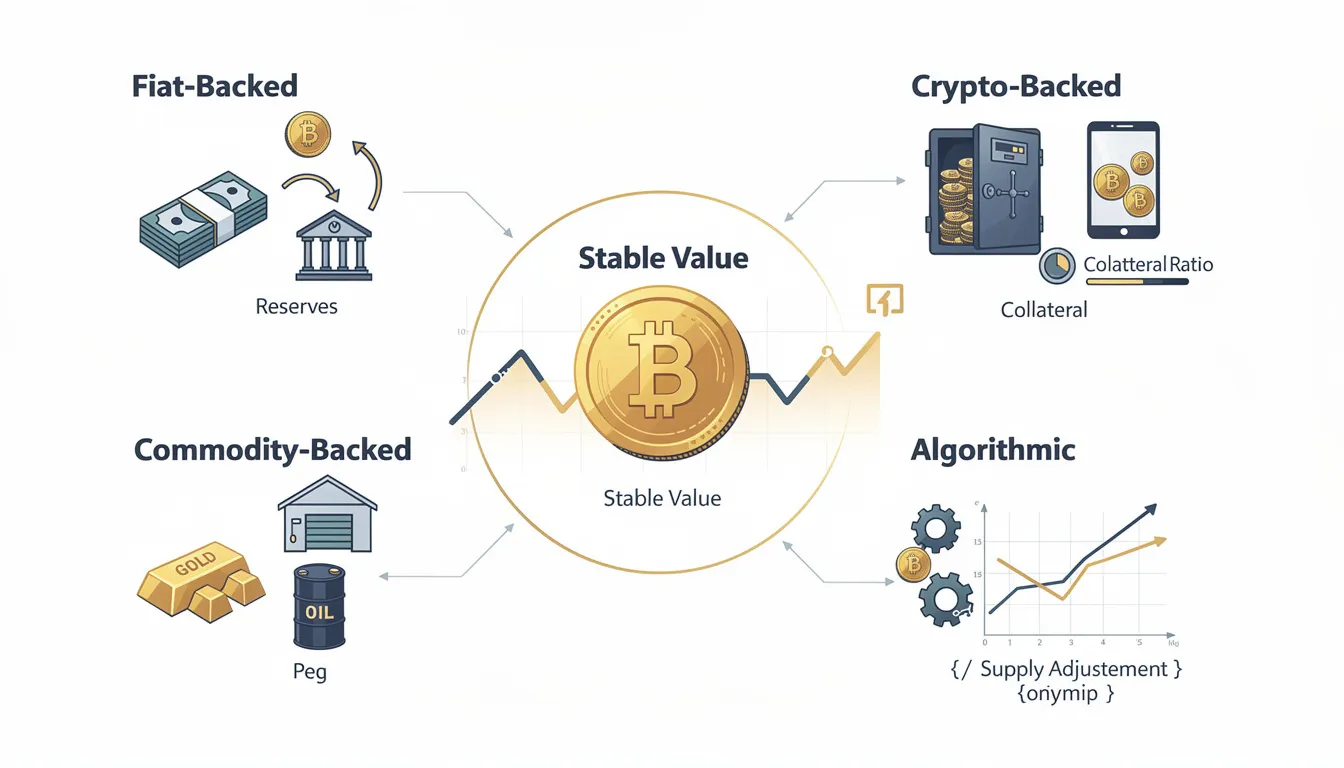
You might wonder how a digital coin stays at exactly one dollar. Most of the time, the company that makes the coin keeps one real dollar in a bank vault for every digital coin they sell. This is called "backing." If you want to trade your digital coin back for a real dollar, the company uses that stash to pay you. This keeps the price steady because everyone knows they can get their "real" money back whenever they want.
Some newer types of stablecoins use math and code to keep the price steady instead of keeping cash in a vault. These are often called algorithmic stablecoins. They are much riskier for beginners because if the math fails or people lose trust, the price can drop to zero very fast. We have seen this happen before, and it serves as a big warning. Always check what is backing your coin before you put your hard-earned money into it. You can find more beginner guides on digital assets to help you tell the difference between safe and risky options.
The role of new rules and regulations
Governments are starting to watch stablecoins very closely. In recent days, we have seen news about things like Liv's USDU, which is a stablecoin that tries to follow strict rules to keep users safe. Regulation sounds like a boring word, but for a beginner, it is actually good news. It means there are laws that try to stop coin makers from lying about how much money they have in the vault.
When a coin is regulated, the company usually has to show proof of their holdings every month. This "proof of reserves" helps build trust. If you are looking for a place to start, picking a coin that is open about its audits is much safer than picking one that hides its data. Even with rules, remember that cryptocurrency is still a new world. No one can promise you that your money is 100% safe, so only use what you can afford to lose while you are learning the ropes.
Common risks for every beginner to know
While it is great that you can use these coins when banks are closed, you have to be your own security guard. If you lose the password to your digital wallet, there is no "forgot password" button like there is at a bank. Your money is just gone. Also, hackers are always looking for ways to steal digital coins. You must use strong passwords and never share your private keys with anyone, even if they claim to be from a support team.
Another risk is the platform you use to buy the coins. Some websites might make it easy to buy stablecoins but then make it very hard to move them to your own wallet. Always read the small print about fees. Some places charge you a lot of money just to move your coins from one place to another. If you are just trying to save a few dollars, these fees can eat up your money before you even get started.
What is the future for these digital dollars?
The goal for many people in this space is to make stablecoins as easy to use as a debit card. We are not quite there yet, but with companies like Samsung and leaders like Mr. Okabe pushing for it, the tech is getting better. One day, you might not even know you are using a stablecoin. You will just tap your phone at a store, and the blockchain will handle the rest in the background.
For now, the best thing you can do is watch how these coins behave during a market dip. Do they stay at one dollar, or do they start to wobble? Watching from the sidelines is a great way to learn without taking any risk. Does the idea of having a backup currency that works when banks are offline make you feel safer, or does the tech still feel too new for you to trust it with your money?


No comments:
Post a Comment